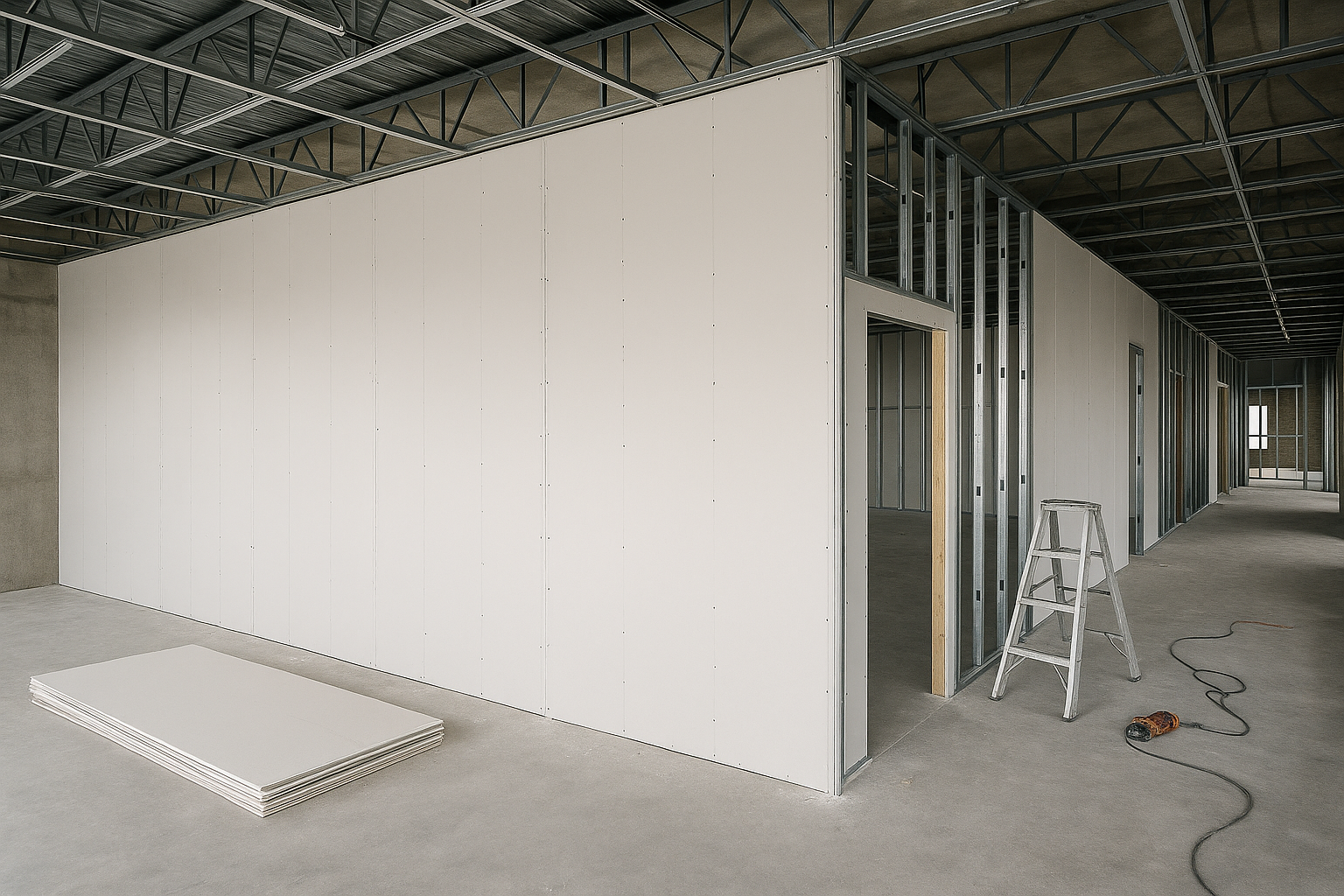
Fast-track construction projects are inherently high-pressure environments. With tighter timelines and less margin for error, pricing drywall accurately becomes both a challenge and a critical factor in ensuring project success. Architects, engineers, and general contractors must navigate fluctuating labor availability, compressed schedules, and volatile material costs—all while meeting exacting design and performance requirements.
Fast-track projects compress the design and construction phases into overlapping timelines. This creates an urgent need for drywall estimates that are not only accurate, but also adaptable. Traditional estimating methods struggle to keep pace, often relying on outdated or static data that fails to reflect the real-time conditions of a dynamic job site.
To meet the needs of fast-track delivery methods, drywall estimators must adopt agile and data-driven workflows. Relying on a static spreadsheet or a once-a-month update cadence no longer suffices. Instead, the most competitive teams are using solutions that continuously sync design updates, market trends, and production realities into every estimate iteration.
Access to clean, historical cost data provides a powerful baseline when new drawings are incomplete or in flux. With benchmarking, teams can generate conceptual pricing with greater confidence—especially when delivery dates precede full design development. For example, estimating drywall per linear foot of partition or square foot of coverage can be calibrated by project type, complexity, or geography.
Modern estimating platforms can directly integrate with design files—both 2D drawings and 3D models—helping identify scope as it evolves. This connection makes it possible to update drywall estimating models in real time without redoing takeoffs from scratch.
When using platforms designed around data-driven intelligence, estimators can predict cost implications even when full details are unknown. These predictive systems account for subjective factors—like installation complexity or congestion—helping estimators price with foresight instead of hindsight.
Estimators using Active Estimating benefit from a purpose-built tool that closes the gap between design evolution and cost certainty. Whether in early conceptual phases or final bid preparation, the platform delivers real-time syncing, transparent audit trails, and version-controlled data transformations.
By eliminating the need to restart estimates at each milestone, Active Estimating enables teams to respond to design changes faster and more accurately. This capability is especially vital in fast-track settings, where the ability to update estimates within hours rather than days or weeks can mean the difference between winning or losing a contract—and ultimately, between profit and loss.
In fast-paced construction, staying ahead of design changes, schedule shifts, and price volatility requires more than guesswork. It demands a disciplined, data-enabled approach to drywall pricing—one that meets the moment and sets a foundation for long-term success.
Contact Information:
Active Estimating
508 2nd Street, Suite 208
Davis
California
95616
Rich Schoener
richard@activeestimating.com
(877)
Schedule a personalized demo to see how Active Estimating can work for your specific needs.

