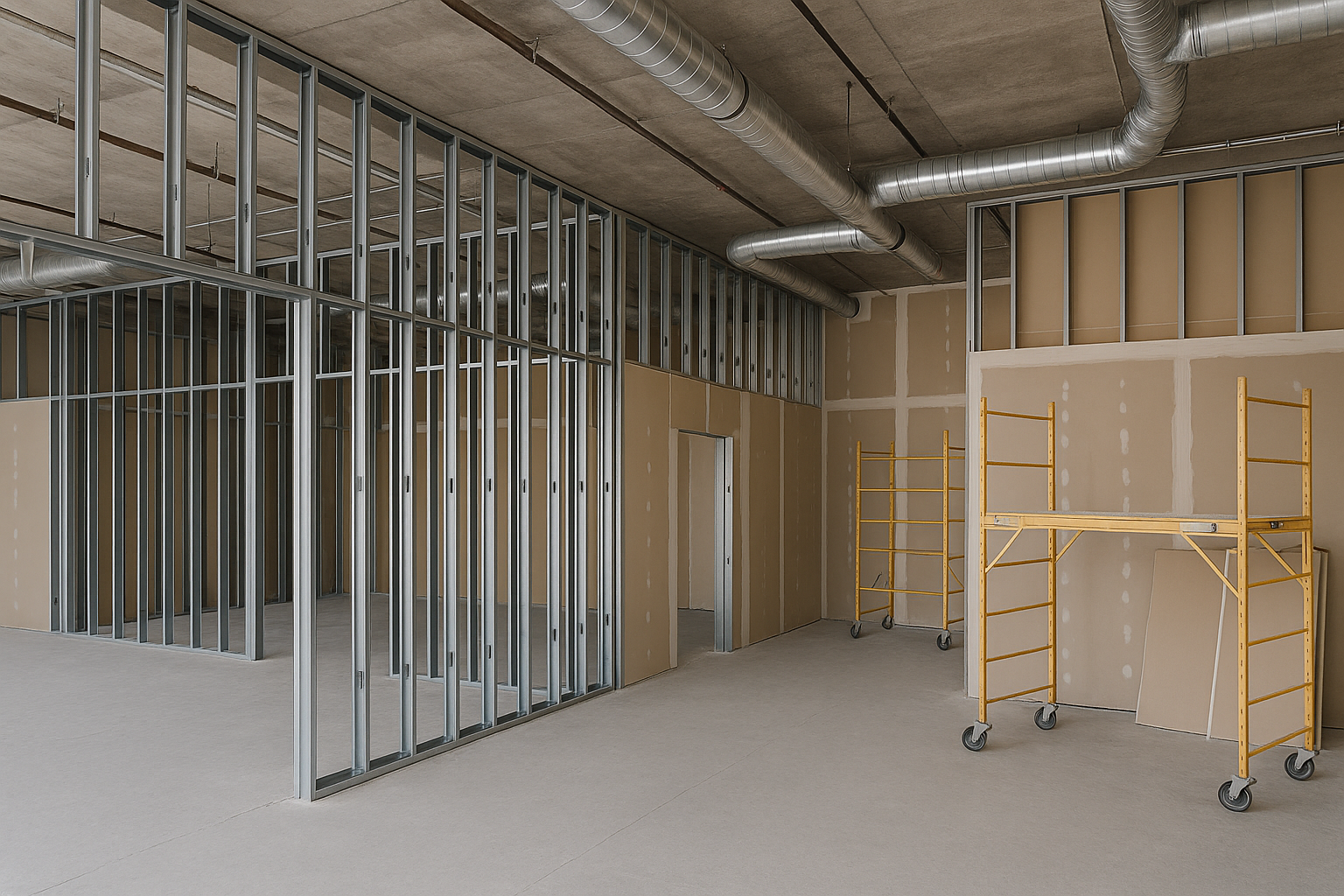
Drywall estimating for high-security facilities demands a specialized approach that considers stringent access controls, non-standard materials, extended coordination protocols, and increased liability for execution errors. For architects, engineers, and general contractors, understanding the unique nuances of these projects is vital to ensure cost control, timeline adherence, and security compliance.
Facilities like data centers, military installations, correctional buildings, and sensitive government sites introduce elevated requirements for both physical construction and documentation standards. The drywall systems in these facilities may be required to meet ballistic ratings, forced-entry resistance, RF shielding, and blast mitigation criteria.
When pricing drywall scopes for secure facilities, estimators should refine their workflow to anticipate constraints and reflect them in pricing assumptions.
Assemblies for high-security projects often exceed UL ratings for fire, acoustics, and impact resistance. Some may be custom-designed based on project-specific testing.
Common high-security wall types include:
Using predefined assemblies in drywall estimating tools that accommodate alternate configurations and embedded accessories (like conduit chases or blast-mitigating anchors) improves accuracy and response time during bidding.
In high-security builds, design evolves through several secure review phases, and documentation may arrive in redacted or rolling packages. Iteration speed is crucial. Estimators using platforms like Active Estimating benefit from the ability to process rapid updates while maintaining data traceability and version control.
To manage evolving scope in a controlled way:
Estimating drywall in high-security facilities requires more than just measurements—it’s a strategy. Estimators must account for non-standard conditions, restricted labor, specialty assemblies, and evolving documents. By applying structured data practices and taking advantage of integrated estimating tools, project teams can bid with confidence and precision. As security-driven construction expands, the ability to estimate with both speed and traceability will become a decisive advantage.
Contact Information:
Active Estimating
508 2nd Street, Suite 208
Davis
California
95616
Rich Schoener
richard@activeestimating.com
(877)
Schedule a personalized demo to see how Active Estimating can work for your specific needs.

