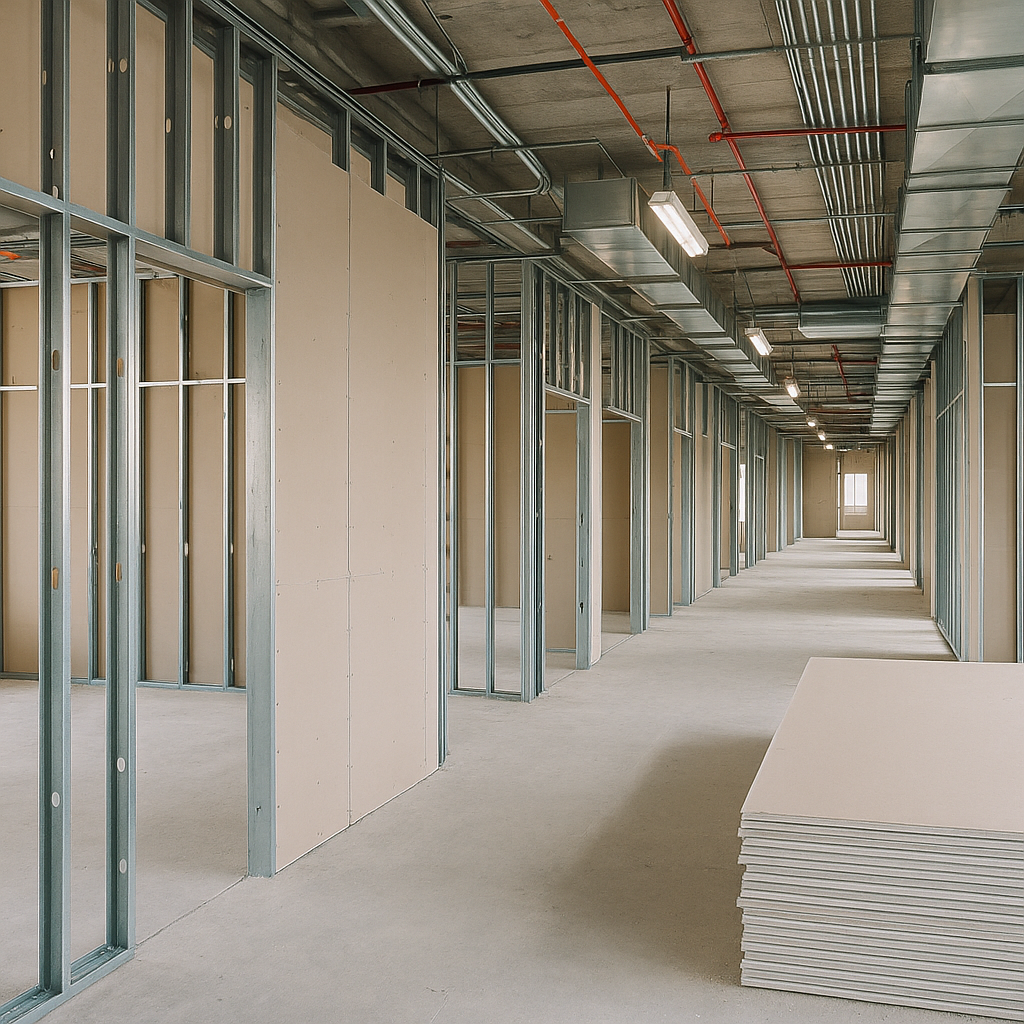
When estimating drywall for multi-level buildings, assuming uniform wall area per floor can introduce major cost discrepancies. Differences in mechanical systems, architectural design, and space usage between floors often create subtle but critical variances in wall area. For estimators, particularly those working with high-density or mixed-use buildings, recognizing and managing wall area variance between floors is essential for delivering accurate and accountable estimates.
Several factors contribute to the inconsistency of wall areas across different building levels:
These nuances can result in wall area swings of 10–30% between levels, significantly skewing quantities if estimates are generalized.
When teams average wall area across floors for the sake of speed, it creates blind spots. This practice can lead to:
As a result, budgeting based on assumed uniformity can lead to margin erosion and field conflict once framing begins.
Estimators should incorporate floor-specific logic early in the takeoff process. Recommendations include:
With this approach, estimators can balance automation with expert oversight, reducing the risk of generalized assumptions.
Access to historical production data per floor and wall type can further refine your estimates. For instance, projects using Active Estimating gain access to benchmarking data that highlights trends across previous builds, enabling faster validation of anomalies and early cost adjustments.
Integrating this data ensures that estimation accounts not just for geometry, but for performance in the field, strengthening predictability.
Modern solutions like drywall estimating software support dynamic filtering by floor, area, or type. These platforms allow for flexible takeoff and reporting structures that evolve with the project, rather than locking estimators into static assumptions.
Wall area variance between floors is a real and quantifiable risk in drywall estimation. By moving away from generalized averages and adopting a data-informed, floor-specific strategy, teams can improve accuracy, reduce rework, and build confidence with stakeholders. It’s time to stop treating walls as uniform, and start estimating them with the granularity they require.
Contact Information:
Active Estimating
508 2nd Street, Suite 208
Davis
California
95616
Rich Schoener
richard@activeestimating.com
(877)
Schedule a personalized demo to see how Active Estimating can work for your specific needs.

