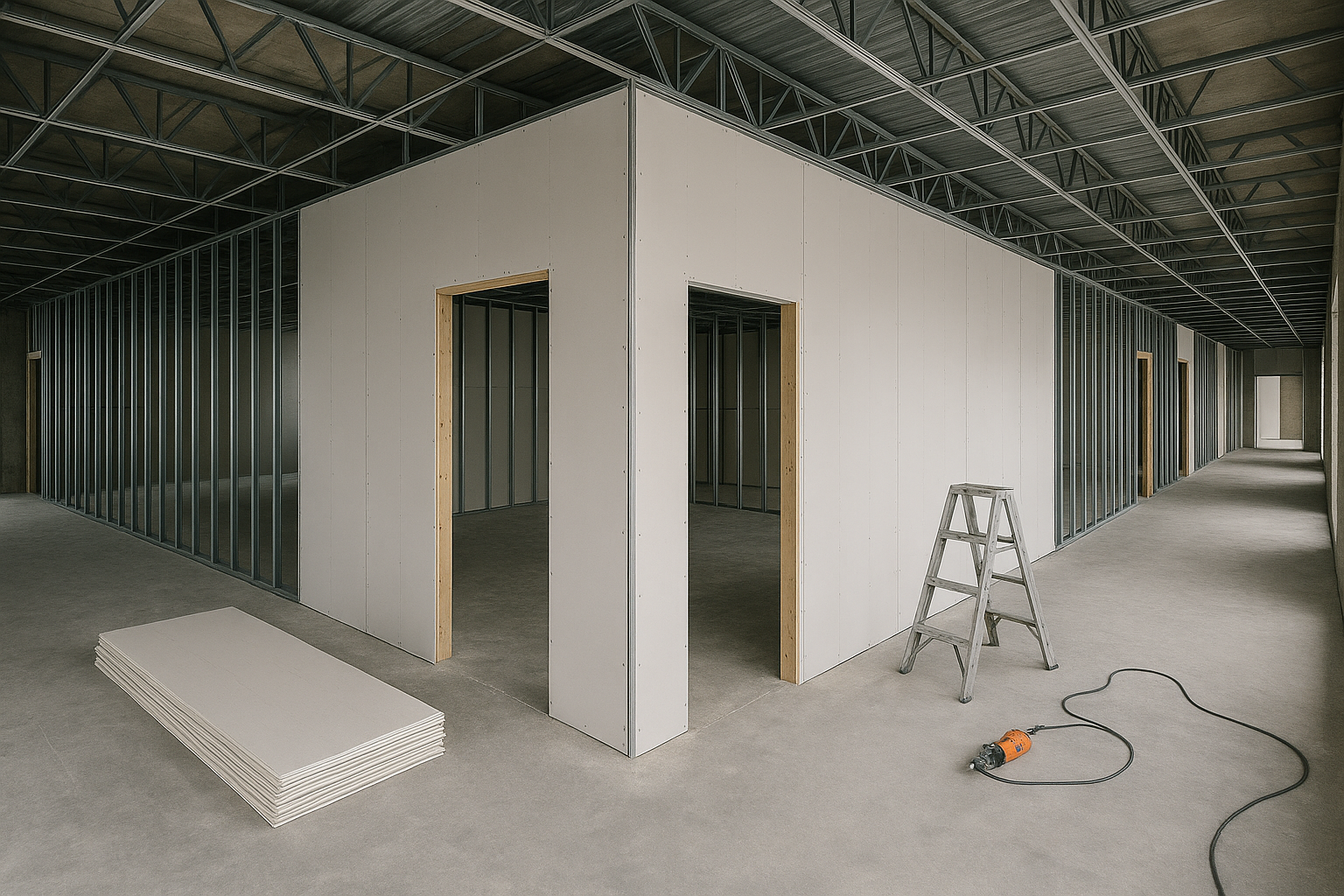
In the fast-paced world of construction, General Contractors, Architects, and Engineers are constantly seeking ways to refine cost estimates—especially when it comes to sophisticated, secure projects like high-security facilities. These environments demand enhanced oversight, unique material specifications, and specialized labor. As such, drywall estimating in these projects is far from straightforward. It requires a high level of precision, accountability, and continuity from design to execution.
Drywall estimation for high-security facilities goes beyond calculating square footage. These buildings often include:
Each of these factors introduces variability, which can affect cost, installation time, and labor planning. Standard takeoff methods may overlook these hidden complexities, resulting in change orders and lost time.
For projects where data sensitivity and physical security converge, maintaining continuity between design, takeoff, and costing is crucial. This is where modern data transformation platforms like Active Estimating bring value. By establishing a transparent, auditable, and repeatable process, teams gain the ability to:
For example, access panels in sensitive areas may require different installation techniques, which need to be costed accurately from the beginning. A traditional workflow might miss these line items entirely.
In high-security projects, subjective insights—such as those from field superintendents or trade specialists—are as important as objective model data. Estimators must document assumptions clearly and adapt as new directives arrive.
One of the challenges in drywall estimating for high-security spaces is that plans often omit key elements due to confidentiality. Therefore, predictive cost modeling—driven by similar past project data—becomes critical. A data-driven solution that integrates subjective inputs ensures these gaps are filled early, avoiding scope creep and mispricing.
To produce reliable estimates in secure environments, contractors should consider:
These strategies reduce the margin for error while improving collaboration between preconstruction, field teams, and owners.
Security-conscious clients—especially in government or financial sectors—prioritize accuracy and accountability. Estimators who can show transparent logic behind their numbers, backed by consistent historical data, are more likely to win contracts. This is why tools like Active Estimating matter: they empower teams to produce defensible, data-rich estimates under tight timelines and evolving requirements.
Estimating drywall systems in high-security facilities is not just about materials and labor—it’s about trust, traceability, and precision. Leveraging a structured and adaptable estimation process ensures that you’re ready for even the most complex and restricted environments. With a foundation built on data integrity and transparent workflows, teams can deliver greater value and lower risk—regardless of the project’s security demands.
Contact Information:
Active Estimating
508 2nd Street, Suite 208
Davis
California
95616
Rich Schoener
richard@activeestimating.com
(877)
Schedule a personalized demo to see how Active Estimating can work for your specific needs.

