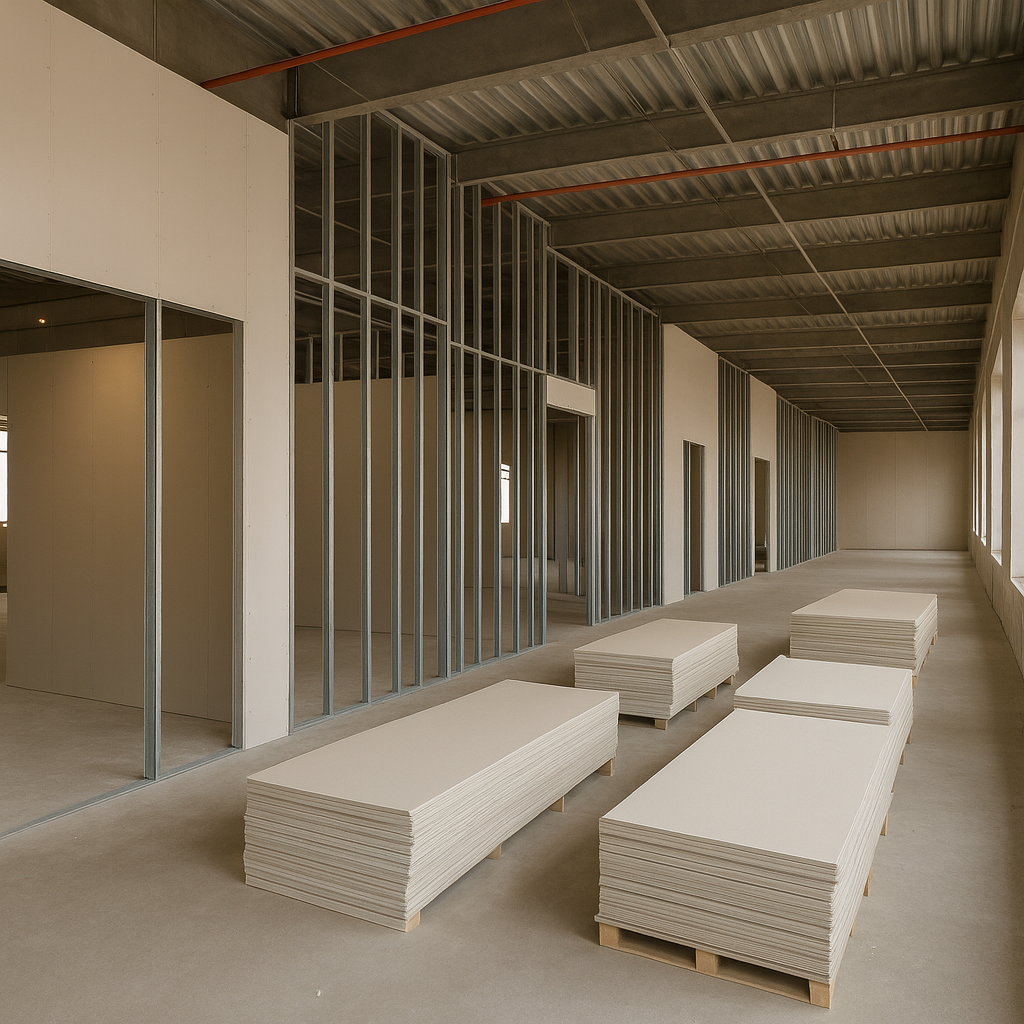
As prefabrication continues to reshape modern construction practices, drywall estimating must evolve alongside it. Prefabricated assemblies—be they fully framed wall panels, integrated MEP pods, or modular partitions—introduce both new efficiencies and new complexities. For architects, engineers, and general contractors working in fast-paced environments, adapting estimating practices to reflect prefab realities is critical for achieving schedule, cost, and performance targets.
In conventional drywall work, estimating revolves around individual materials, labor sequences, and on-site logistics. Prefabrication flips this approach by consolidating tasks into a controlled factory process. Instead of calculating how long it takes to frame, hang, and finish drywall on site, estimators must assess the full value of prefabricated assemblies delivered ready for installation.
This change requires a fundamental reevaluation of unit costs, installation rates, and coordination factors. Traditional labor-hour estimates are no longer accurate proxies for installed cost.
When executed properly, prefab drywall systems offer notable advantages. But those benefits are only realized if the estimate accurately reflects the prefab scope. Leveraging tools like Active Estimating can help construction teams forecast cost impacts more precisely and trace those values back to the scope they represent.
Estimators working with prefabrication need access to accurate, assembly-level benchmarks. With drywall estimating tools that track both standard and custom assemblies, estimators can:
This level of detail and traceability is critical when submitting budgets during early project phases and defending those budgets as design progresses.
Prefabrication is not just a construction trend—it’s a cost planning shift. Estimators who understand how to quantify and manage prefab assemblies will drive greater predictability and performance into every drywall scope. With support from integrated platforms like Active Estimating, teams can embrace prefabrication while still achieving the speed and accuracy that complex construction projects demand.
Contact Information:
Active Estimating
508 2nd Street, Suite 208
Davis
California
95616
Rich Schoener
richard@activeestimating.com
(877)
Schedule a personalized demo to see how Active Estimating can work for your specific needs.

