Accurately costing interior partitions is a fundamental component of drywall estimation, but too often, door and frame openings are either miscounted or handled as afterthoughts. For general contractors, architects, and engineers, failing to properly account for these elements introduces quantifiable risks to both budgeting and scheduling. With precision, coordination, and data-informed insights, these challenges can be mitigated.
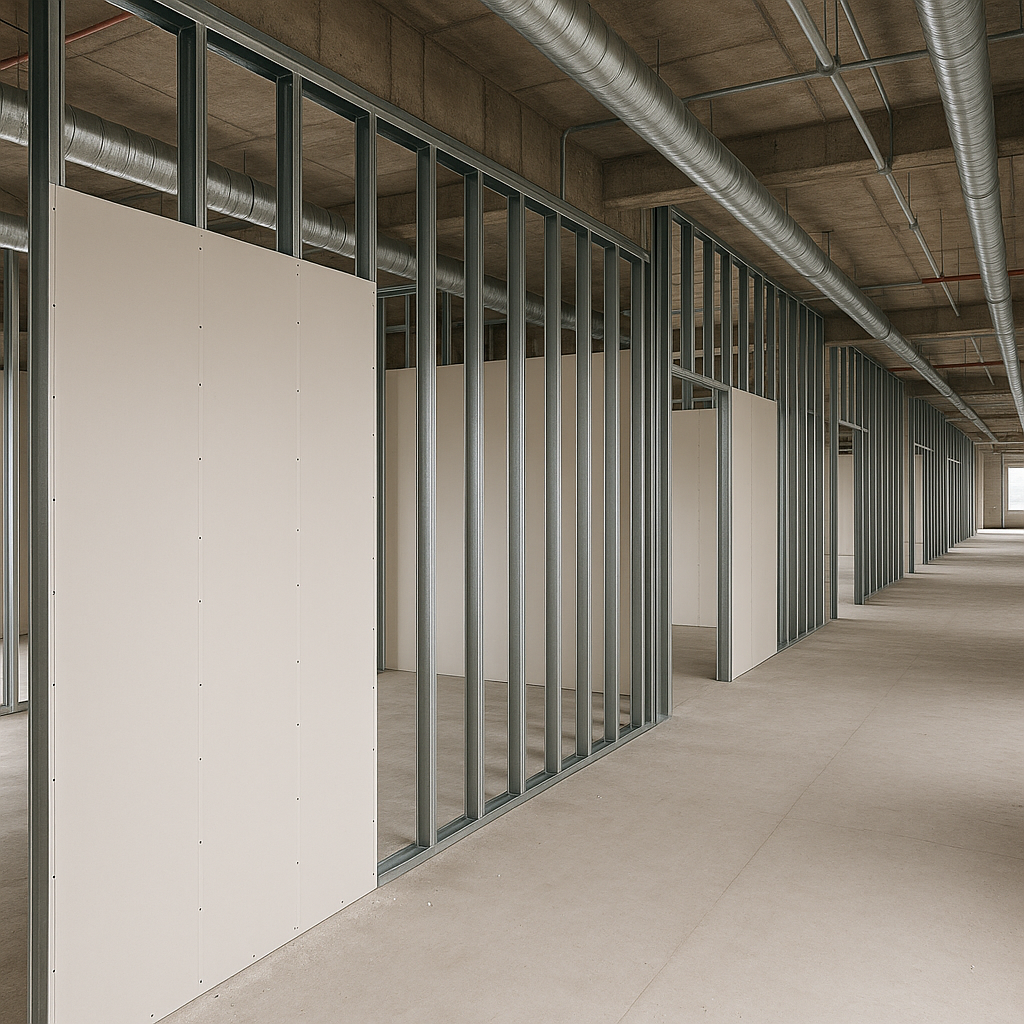
Interior partitions serve as the skeletal system of most building interiors. However, when door and frame openings are embedded within these systems, the scope complexity increases. These interruptions in wall continuity affect labor rates, material usage, and even staging logistics.
Estimators relying on manual takeoffs or static plans often treat partitions as continuous areas, applying broad deducts for door openings. This approach can:
What results is a misleading assumption that fewer materials mean lower costs—when, in reality, openings complicate the workflow.
To improve estimate accuracy, teams must integrate openings as discrete scope items. This involves:
Modern estimating platforms like Active Estimating provide capabilities to break out door and frame openings automatically during takeoff. By leveraging rule-based systems and historical benchmarking, the software flags any inconsistencies and aligns data across design iterations, saving time and reducing error risk.
These systems also allow estimators to assign cost impact by door type or frame configuration, using data pulled directly from model objects or 2D plan references. When integrated into a drywall estimating workflow, this leads to enhanced visibility and tighter cost control.
Interior openings aren’t a drywall-only issue. They touch millwork, security, fire-stopping, and sometimes MEP coordination. By properly costing openings, the estimator sets the stage for clearer trade delineation and minimizes scope disputes. For design-build and design-assist projects, this clarity supports more efficient preconstruction planning and smoother subcontractor buyout.
Failing to treat door and frame openings as critical estimating variables can introduce avoidable risk. Through standardized practices, real-time collaboration, and data-enabled insights, contractors can transform this high-friction area into a strength. The right tools and process mindset, such as those offered by Active Estimating, help drive accountability from takeoff to field execution—resulting in fewer surprises and better financial outcomes.
Contact Information:
Active Estimating
508 2nd Street, Suite 208
Davis
California
95616
Rich Schoener
richard@activeestimating.com
(877)
Schedule a personalized demo to see how Active Estimating can work for your specific needs.

