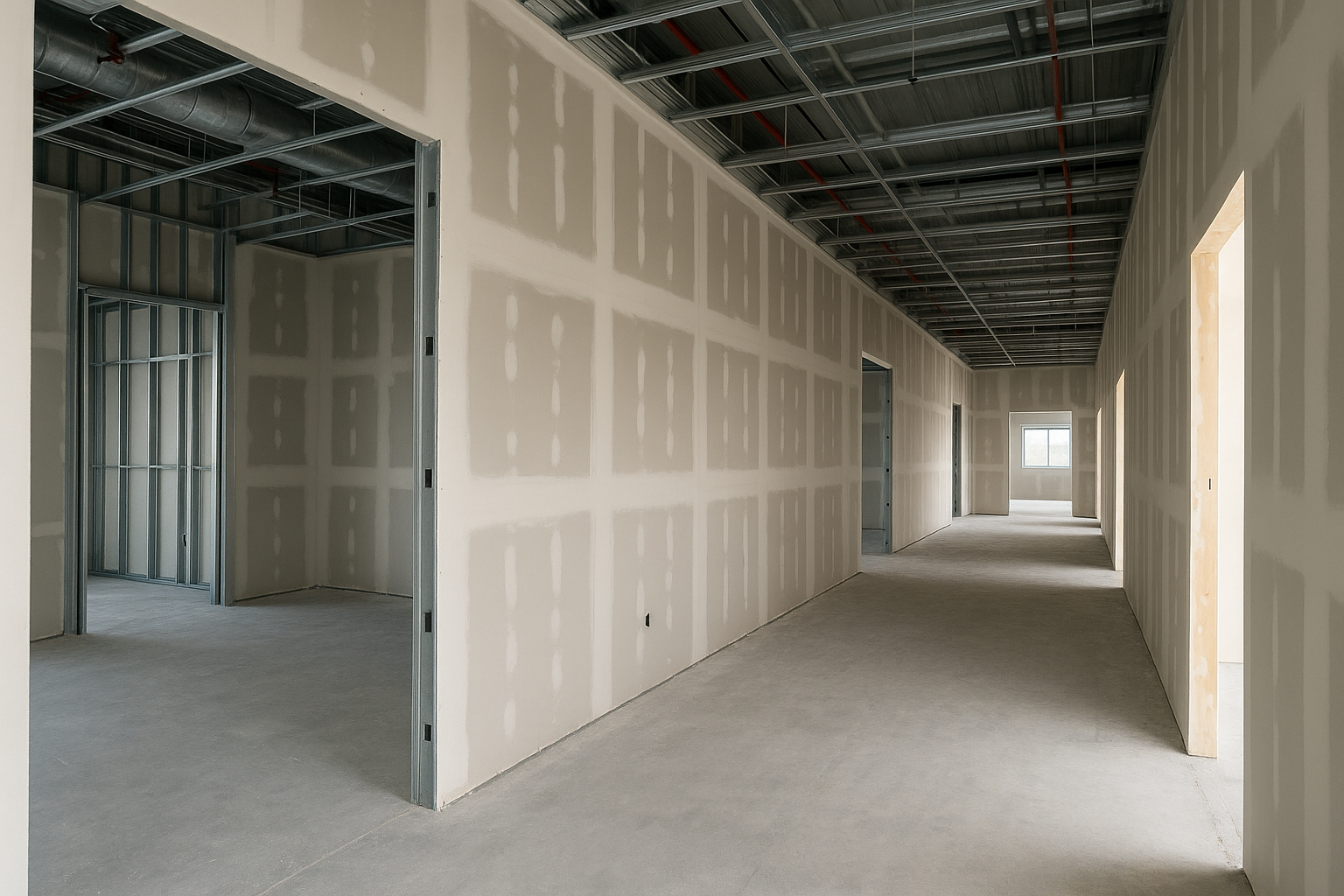
In renovation projects, field conditions are rarely predictable. Existing structures often hide undocumented elements—framing anomalies, outdated materials, or unexpected utilities—that pose significant challenges for drywall estimating. For architects, engineers, and general contractors, effective coordination of these field conditions is essential to avoid costly change orders, delays, and scope redefinition. Accurate preconstruction planning must be flexible enough to accommodate evolving site realities, especially when working in occupied or historically significant spaces.
Unlike new construction, renovation projects come with legacy constraints. These include:
Drywall estimating in these environments requires more than static takeoffs. It requires an adaptive system that incorporates feedback loops, subjective data, and production-based metrics to manage risks and update costs in real time.
Successful drywall estimation in renovation settings hinges on aligning the digital estimate with evolving physical conditions. Here’s how to make that coordination effective:
Coordinating changing field conditions manually can result in fragmented documentation and reactive estimating. Instead, using Active Estimating, project teams gain a continuously updated, transparent record of changes and assumptions. The platform’s data transformation tools ensure all revisions—whether model-based or manually logged—are traceable and easily updated across all estimate versions.
This real-time update capability turns what used to be static assumptions into dynamic cost factors. When site realities shift, your drywall scope and quantities shift with them—backed by production-based context, not guesswork.
Beyond adapting to the moment, renovations can also benefit from historical renovation data. Patterns such as “typical hidden conditions per building era” or “mean drywall waste factor per vintage structure” become usable benchmarks. Through drywall estimating tools that integrate historical production data with current project metrics, estimators can anticipate risks and add more realistic allowances from day one.
Coordinating field conditions in renovation projects demands more than an experienced eye—it requires systems that adapt to evolving realities and still deliver accurate cost forecasts. The most efficient teams are those who not only react to field conditions, but proactively design their estimating workflows to integrate them. With real-time transformation, layered data intelligence, and traceable updates, estimators can reduce surprises, build trust, and protect margins—even when the walls themselves aren’t fully understood.
Contact Information:
Active Estimating
508 2nd Street, Suite 208
Davis
California
95616
Rich Schoener
richard@activeestimating.com
(877)
Schedule a personalized demo to see how Active Estimating can work for your specific needs.

