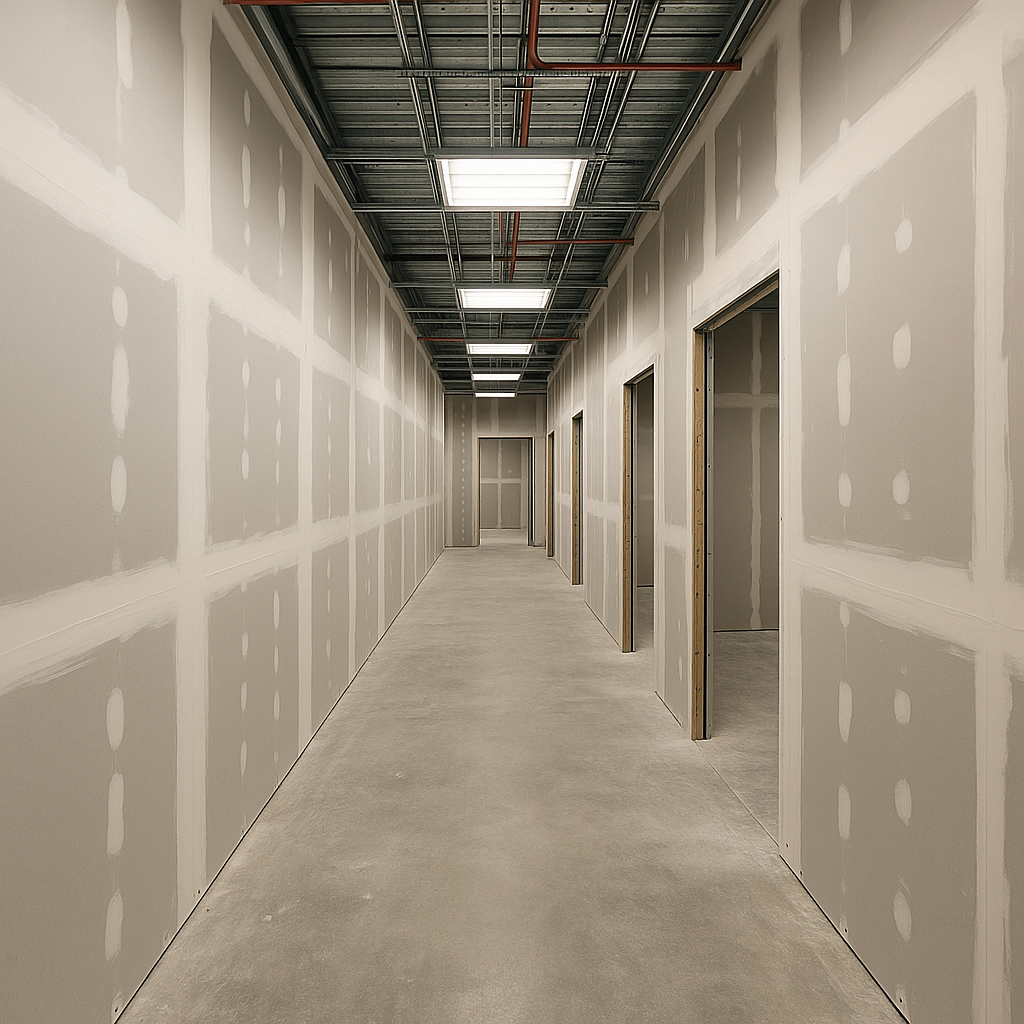
In high-density construction zones, the challenge of accurate installation cost estimation becomes more complex due to tight spatial configurations, increased coordination needs, and the sheer volume of overlapping trades. For architects, engineers, and general contractors, ignoring these factors can lead to misaligned budgets, project delays, and costly change orders. Instead, a structured and analytical approach that quantifies installation difficulty can result in greater predictability and project control.
High-density areas—such as hospitals, labs, multifamily towers, and commercial cores—are notorious for coordination congestion. Multiple systems including mechanical, electrical, plumbing, and low voltage services often share limited routing space with drywall assemblies. This overlap requires granular planning and modeling to avoid installation conflicts and rework.
Estimators can account for installation difficulty by embedding objective modifiers into their takeoff logic. These modifiers may include:
By incorporating these values, project teams can arrive at an installation factor multiplier, adjusting base labor units to reflect site conditions more accurately. This not only enhances cost realism but improves scheduling reliability.
Many contractors already possess valuable data from previous high-density installations. Capturing and applying these insights across new projects is critical. For example:
This feedback loop can be integrated into your drywall estimating processes to improve bid strategy and labor forecasting. Using drywall estimating software with data transformation capability allows for the synthesis of these learnings in future estimates.
Estimators are no longer simply number crunchers. In today's projects, they serve as strategic forecasters. By calculating and communicating the impact of density-related challenges early, estimators can:
Modern data-driven platforms help streamline the complexity of these adjustments. Solutions like Active Estimating empower users with configurable data workflows that align historical and real-time inputs for quick iteration and visualization.
Rather than generalize high-density installations as “difficult,” users can now define, assign, and apply repeatable criteria—providing consistency across estimators and transparency for stakeholders.
High-density projects don't have to mean high-cost surprises. By systematizing how installation difficulty is measured and calculated, construction teams can avoid reactive budgeting and instead move toward proactive planning. As building complexity increases, so should the intelligence behind the estimates guiding them.
Contact Information:
Active Estimating
508 2nd Street, Suite 208
Davis
California
95616
Rich Schoener
richard@activeestimating.com
(877)
Schedule a personalized demo to see how Active Estimating can work for your specific needs.

